

Key Takeaways
- Nail fungus is a common infection that mainly affects toenails.
- It usually starts as a small white, yellow, or brown spot under the nail.
- Thick, brittle, discolored nails are the most common symptoms.
- Fungi grow best in warm, moist places like sweaty shoes and public showers.
- Early treatment helps prevent the infection from spreading.
- Keeping your feet clean and dry is one of the best ways to prevent nail fungus.
What Is Nail Fungus?
Nail fungus, medically known as onychomycosis, is a fungal infection that grows beneath or inside the nail. It can affect both fingernails and toenails, but toenails are infected much more often because they spend most of the day inside warm, closed shoes.
The infection usually begins as a small white or yellow spot at the edge of the nail. Over time, the fungus spreads deeper into the nail, causing discoloration, thickening, and damage.
Although nail fungus is not usually a serious health problem, it rarely goes away on its own. Without treatment, it can become painful and may spread to other nails.
Quick Fact: Medical studies show that nail fungus accounts for nearly 50% of all nail diseases worldwide, making it one of the most common nail conditions.
What Causes Nail Fungus?
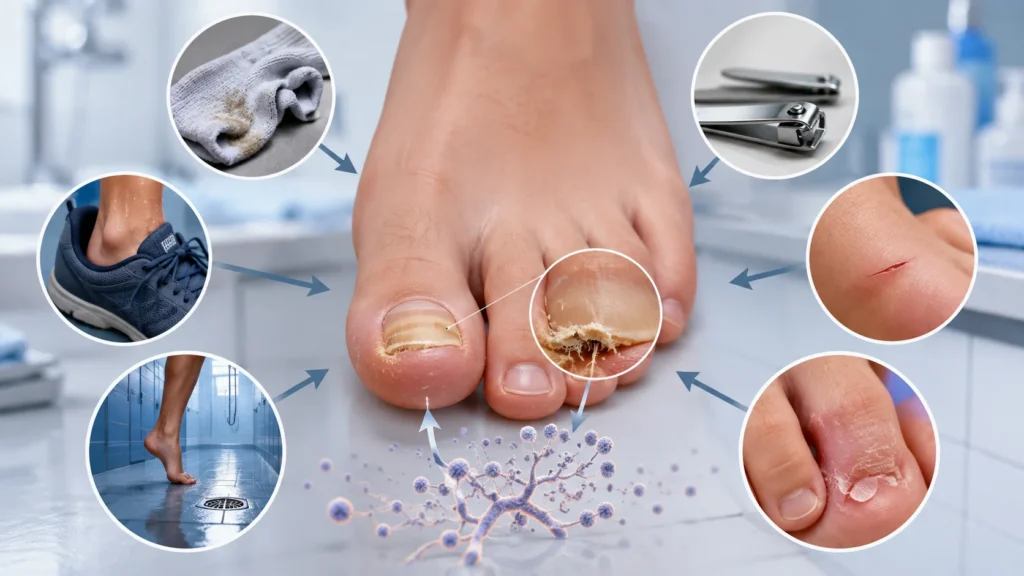
Nail fungus develops when tiny fungi enter the nail through small cracks or cuts. The most common fungi responsible are called dermatophytes, although yeasts and molds can also cause infections.
Common causes include:
- Wearing damp socks for long hours
- Sweaty feet
- Walking barefoot in public showers
- Sharing shoes or nail clippers
- Nail injuries
- Poor foot hygiene
- Athlete’s foot spreading to the nails
- Wearing tight shoes every day
Because fungi love moisture and warmth, toenails are much more likely to become infected than fingernails.
Common Symptoms of Nail Fungus
Symptoms often appear slowly, which means many people don’t notice the infection right away.
Common signs include:
- White, yellow, or brown nail discoloration
- Thickened nails
- Brittle or cracked nails
- Nails that crumble easily
- Misshapen nails
- A bad smell coming from the nail
- Nail lifting away from the skin
- Pain while wearing shoes or walking
The infection may affect one nail or several nails at the same time.
Who Is More Likely to Get Nail Fungus?
Anyone can develop nail fungus, but some people have a higher risk.
You may be more likely to get it if you:
- Are over 60 years old
- Have diabetes
- Have poor blood circulation
- Sweat heavily
- Wear closed shoes most of the day
- Have athlete’s foot
- Have a weakened immune system
- Frequently visit swimming pools or gyms
As people get older, their nails grow more slowly, making fungal infections easier to develop.
Pro Tip
Choose breathable shoes made from mesh or leather. They allow air to circulate and help keep your feet dry, reducing the risk of fungal infections.
How Does Nail Fungus Spread?
Nail fungus spreads through direct contact with fungal spores. These spores can survive on floors, towels, shoes, and nail tools.
The infection can spread by:
- Walking barefoot in locker rooms
- Using shared nail clippers
- Sharing socks or shoes
- Touching infected skin
- Using unclean pedicure equipment
Practicing good hygiene greatly lowers your chances of getting infected.

Different Types of Nail Fungus
Doctors classify nail fungus into several types.
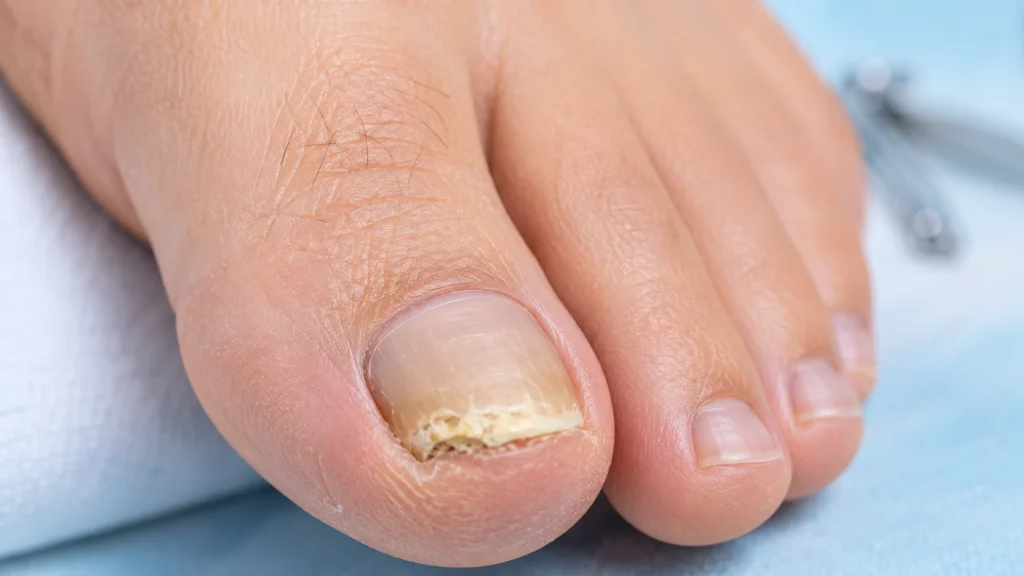
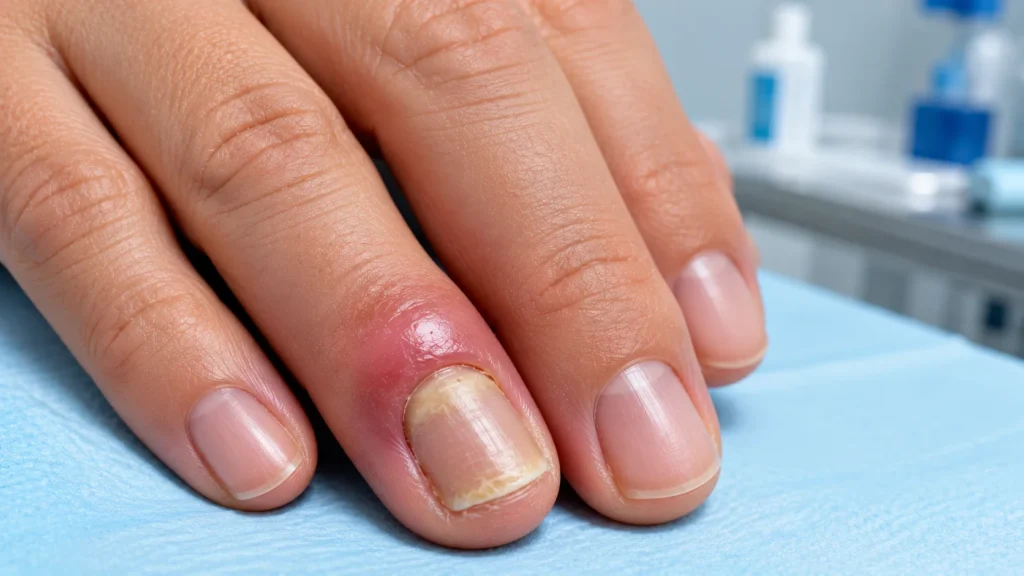
Distal Subungual Onychomycosis
This is the most common type. It begins at the tip or side of the nail and slowly spreads inward.
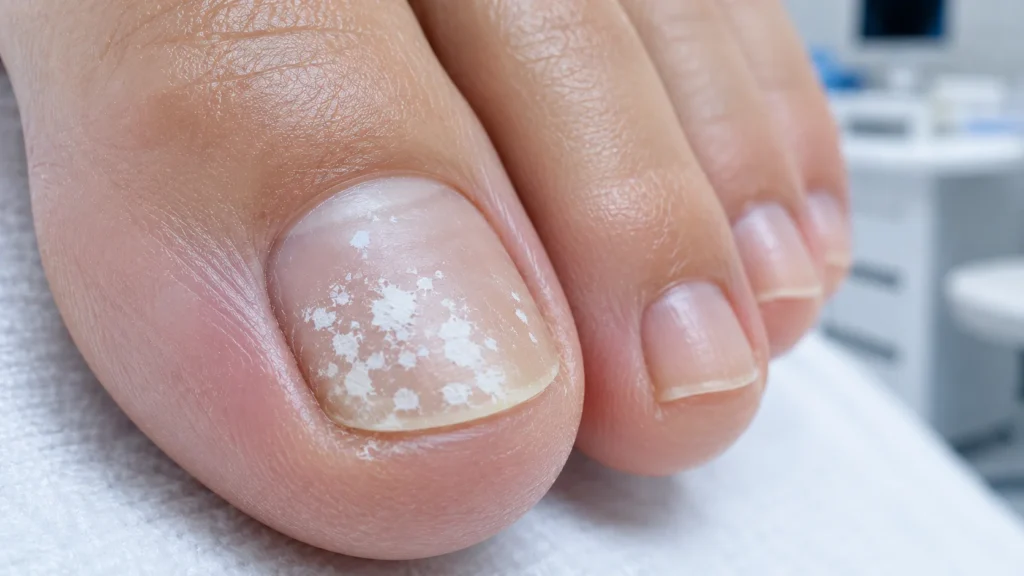
White Superficial Onychomycosis
White patches appear on the surface of the nail and gradually spread.
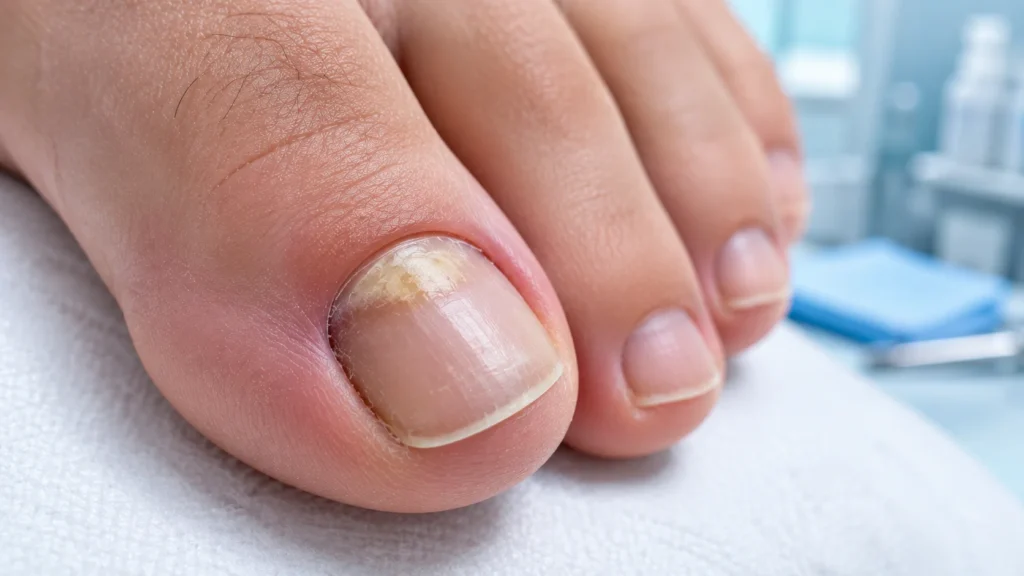
Proximal Subungual Onychomycosis
The infection starts near the cuticle. It is less common but may occur in people with weakened immune systems.
Candida Nail Infection
This type is caused by yeast and usually affects fingernails rather than toenails.
How Is Nail Fungus Diagnosed?
A doctor can often recognize nail fungus by examining your nails.
To confirm the diagnosis, they may:
- Take a small nail clipping
- Scrape material from beneath the nail
- Examine the sample under a microscope
- Send it to a laboratory for testing
Identifying the exact fungus helps doctors recommend the most effective treatment.
Treatment Options for Nail Fungus
Treatment depends on how severe the infection has become.
Topical Antifungal Medicines
Prescription antifungal nail solutions and creams work best for mild infections.
Examples include:
- Ciclopirox
- Efinaconazole
- Tavaborole
These treatments usually need to be applied daily for several months.
Oral Antifungal Medicines
For deeper infections, doctors often prescribe oral medications.
Common options include:
- Terbinafine
- Itraconazole
These medicines generally work better than topical treatments but should only be taken under medical supervision.
Laser Therapy
Some dermatology clinics offer laser treatment to target fungal infections.
Research suggests laser therapy may help some patients, although results vary and more studies are still needed.
Nail Removal
If the nail is badly damaged or painful, a doctor may remove part or all of the infected nail to allow healthier nail growth.
Home Care Tips
Good daily care can improve treatment results and help prevent the infection from returning.
Helpful habits include:
- Wash your feet every day.
- Dry between your toes carefully.
- Trim nails straight across.
- Wear clean socks daily.
- Use antifungal foot powder if recommended.
- Rotate your shoes to let them dry.
- Disinfect nail clippers after each use.
Remember that home care supports treatment but usually does not cure nail fungus by itself.
Quote: “Healthy feet start with healthy habits. A few minutes of daily care can prevent months of treatment.”
Can Nail Fungus Go Away Without Treatment?
In most cases, no.
Unlike some skin infections, nail fungus usually stays inside the nail until it is treated. Waiting too long often allows the infection to spread and become harder to remove.
How Long Does Treatment Take?
Nails grow slowly, so recovery requires patience.
Typical treatment times include:
- Fingernails: about 4 to 6 months
- Toenails: about 9 to 18 months
Even after the fungus is gone, the damaged nail must grow out before it looks completely healthy again.
How to Prevent Nail Fungus
Simple daily habits can reduce your risk of infection.
Follow these tips:
- Keep your feet clean and dry.
- Wear flip-flops in public showers.
- Avoid sharing nail tools.
- Wear breathable shoes.
- Change socks after exercise.
- Cut nails regularly.
- Treat athlete’s foot quickly.
- Choose properly fitting footwear.
These small habits can make a big difference.
When Should You See a Doctor?
You should see a healthcare professional if:
- The infection becomes painful.
- Several nails are affected.
- The nail separates from the skin.
- You have diabetes.
- Home treatment is not helping.
- The nail becomes very thick or difficult to cut.
Early medical treatment often gives the best results.
Final Thoughts
Nail fungus is a common but treatable condition. It often begins with a small change in nail color and gradually causes thick, brittle, or damaged nails if left untreated. The good news is that early diagnosis, proper medication, and good foot hygiene can successfully treat most cases. If you notice ongoing nail changes or pain, consult a healthcare provider to receive the right treatment before the infection worsens
GIPHY App Key not set. Please check settings