
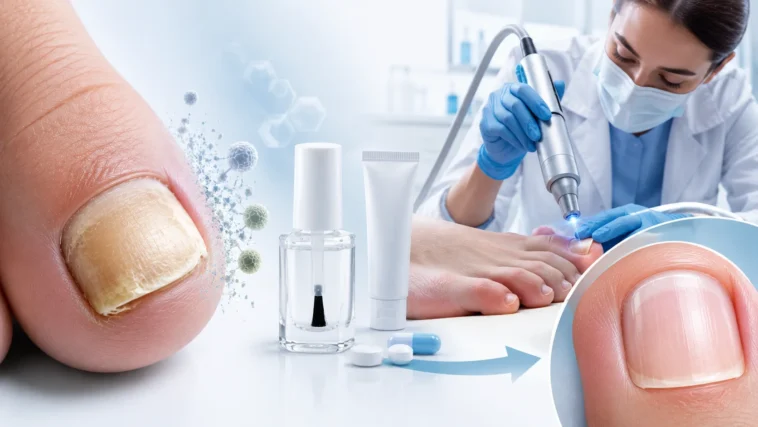
Nail fungus is one of the most common nail problems, affecting millions of people every year. It usually starts as a small white or yellow spot under the nail and can gradually make the nail thick, brittle, discolored, and difficult to trim. While nail fungus isn’t usually dangerous, it rarely goes away without treatment.
The good news is that several treatments are available today, from medicated nail lacquers and prescription medicines to laser therapy and home remedies. However, not every treatment works the same for everyone.
This guide explains the best nail fungus treatments available in 2026, how they work, and which option may be right for your condition.
Key Takeaways
- Mild nail fungus can often be treated with topical antifungal products.
- Severe infections may require prescription oral medication.
- Laser treatment is an option for stubborn infections but results vary.
- Home remedies may help improve nail hygiene but have limited scientific evidence.
- Early treatment gives the best chance of complete recovery.
What Is Nail Fungus?
Nail fungus, also called onychomycosis, is a fungal infection that affects the fingernails or toenails. The infection usually begins beneath the nail and slowly spreads over time.
Common symptoms include:
- Yellow, white, or brown nail discoloration
- Thickened nails
- Brittle or crumbly nails
- Distorted nail shape
- Nail lifting from the nail bed
- Unpleasant odor in some cases
Without treatment, the infection may continue to spread and become more difficult to cure.
Nail Fungus Treatments
There isn’t a single treatment that works for every person. The best choice depends on how severe the infection is, how many nails are affected, and your overall health.
1. Topical Antifungal Treatments
Topical treatments are often the first choice for mild nail fungus.
Popular options include:
- Amorolfine 5% Nail Lacquer
- Ciclopirox Nail Lacquer
- Efinaconazole Solution
- Tavaborole Solution
These products are applied directly to the infected nail and work by stopping fungal growth.
Best for:
- Mild infections
- One or two infected nails
- Early-stage fungus
Pros
- Easy to apply
- Few side effects
- Available without prescription in some countries
Cons
- Slow results
- Daily or weekly application required
- Less effective for severe infections
2. Oral Prescription Medications
Doctors often recommend oral antifungal medicines when the infection is severe or affects several nails.
Common prescription medicines include:
- Terbinafine
- Itraconazole
- Fluconazole
These medicines reach the fungus through the bloodstream, making them more effective than topical treatments in many cases.
Pros
- Higher success rates
- Better for advanced infections
- Faster improvement
Cons
- Prescription required
- Possible side effects
- Liver monitoring may be necessary for some patients
Laser Treatment for Nail Fungus
Laser treatment has become more popular over the past few years.
During the procedure, a medical laser delivers heat energy through the nail to target fungal cells without removing the nail.
Many clinics advertise laser therapy as a quick solution, but research shows that results can vary between patients. Some people experience noticeable improvement, while others may still need topical or oral medication after treatment.
Benefits of Laser Treatment
- No daily medication
- Quick clinic sessions
- Minimal recovery time
- Little discomfort for most patients
Drawbacks
- Can be expensive
- Multiple sessions may be needed
- Not always covered by insurance
- Results are not guaranteed
Laser treatment is often considered when traditional treatments have failed or when patients cannot take oral medication.
At-Home Remedies for Nail Fungus
Many people search for natural ways to treat nail fungus before visiting a doctor.
Popular home remedies include:
- Tea tree oil
- Vicks VapoRub
- Vinegar foot soaks
- Baking soda
- Coconut oil
Although some people report improvement, scientific evidence supporting these remedies remains limited. Most experts recommend using them only as supportive care rather than replacing proven antifungal treatments.
Good foot hygiene is far more important than relying on home remedies alone.
Tips to Prevent Nail Fungus
Preventing reinfection is just as important as treatment.
Follow these simple habits:
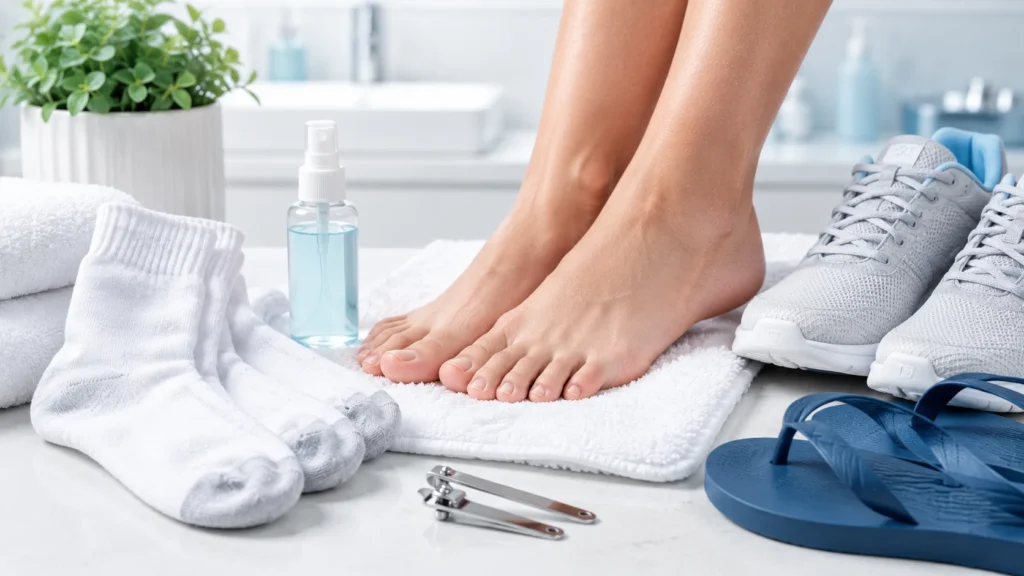
- Wash and dry your feet thoroughly.
- Change socks every day.
- Wear breathable shoes.
- Keep nails trimmed.
- Disinfect nail clippers regularly.
- Wear flip-flops in public showers.
- Avoid sharing nail care tools.
These small steps can greatly reduce the risk of future infections.
How Long Does Treatment Take?
Nail fungus grows slowly, so treatment requires patience.
Typical recovery times are:
- Fingernails: 4–6 months
- Toenails: 6–12 months
- Severe infections: More than one year
Even if the fungus has been eliminated, the damaged nail must grow out before the nail looks healthy again.
When Should You See a Doctor?
Seek medical advice if:
- The infection becomes painful.
- More than two nails are infected.
- The nail starts separating from the nail bed.
- You have diabetes or poor circulation.
- Home treatment does not improve the infection after several months.
Early treatment usually leads to better results and prevents the fungus from spreading.
Frequently Asked Questions
What is the best treatment for nail fungus?
For mild infections, topical antifungal nail lacquers are often effective. Moderate to severe infections usually respond better to prescription oral antifungal medication.
Does laser treatment permanently cure nail fungus?
Laser therapy may help some patients, but no treatment can guarantee permanent results. Good foot hygiene is essential to prevent the fungus from returning.
Are home remedies effective?
Home remedies may improve nail appearance or help reduce moisture, but they should not replace medically proven antifungal treatments.
Can nail fungus go away on its own?
In most cases, no. Without treatment, the infection usually spreads and becomes harder to treat.
Final Verdict
The best nail fungus treatment depends on how advanced the infection is. Mild infections often respond well to topical antifungal products, while severe cases usually require prescription medication. Laser treatment can be a useful option for stubborn infections, although success rates vary, and home remedies should only be viewed as supportive care rather than a cure.
The most important factor is starting treatment early and staying consistent. Nail fungus takes months to clear because healthy nails grow slowly, but with the right treatment and proper foot hygiene, most people can achieve healthy, clear nails over time.
GIPHY App Key not set. Please check settings